Picking the right hijab is about more than just matching colors with your outfit. Fabric choice affects how comfortable you feel through a long day, how well the hijab drapes, and even how it holds up in Pakistan's mix of scorching summers and chilly winters. With so many fabric types available, it's easy to end up with a hijab that looks great on the hanger but feels wrong the moment you step outside.
This guide breaks down the most popular hijab fabrics available in Pakistan, when to wear each one, and how to build a hijab collection that actually works for your daily routine from casual days to festive occasions.
Why Fabric Choice Matters More Than Color
Most people shop for hijabs based on color first and fabric second, but it should really be the other way around. The wrong fabric can:
- Slip constantly and need repinning throughout the day
- Feel too hot and heavy during summer
- Wrinkle easily and look untidy by midday
- Show through in bright sunlight if it's too sheer without proper layering
Once you understand how different fabrics behave, choosing the right piece for the right occasion becomes much easier.
Popular Hijab Fabrics and When to Wear Them
1. Chiffon Hijabs
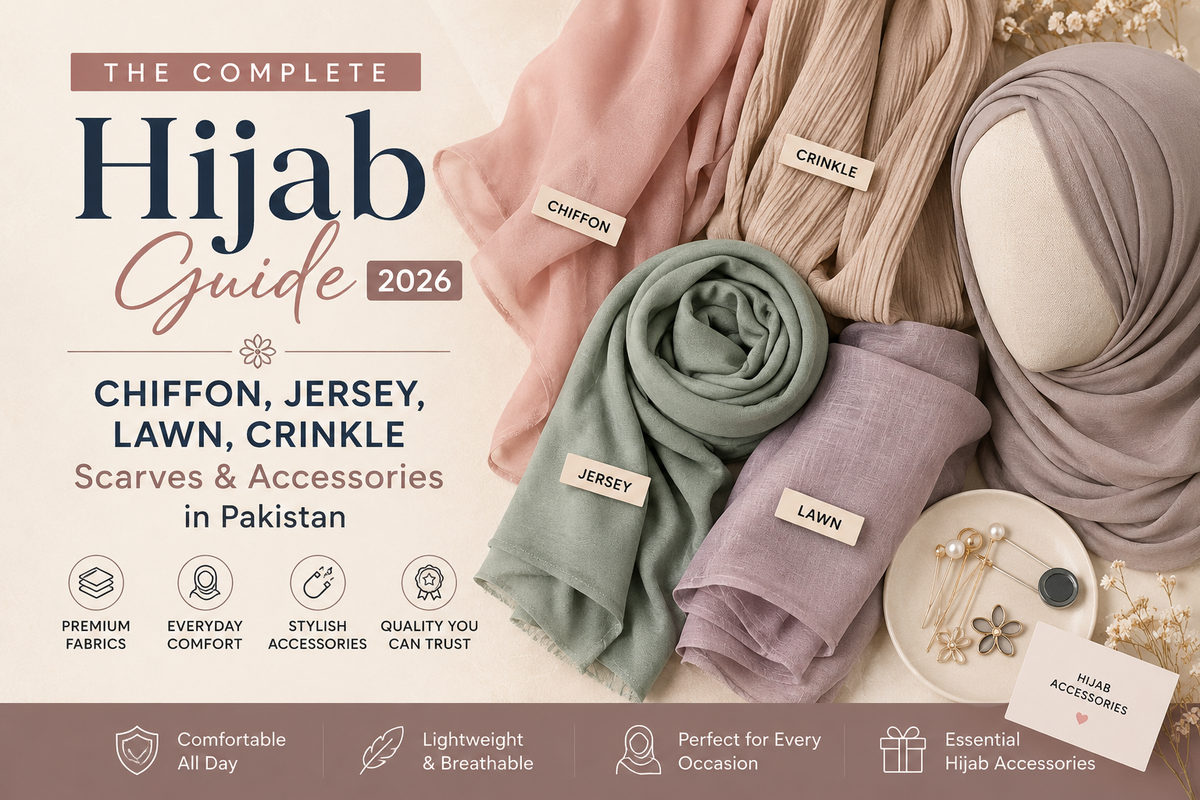
Chiffon hijabs are one of the most widely worn options in Pakistan, and for good reason. The fabric is lightweight, drapes beautifully, and holds pleats well, which makes it a favorite for everyday wear as well as semi-formal outings. Chiffon is breathable enough for warmer months but still has enough structure to stay neatly pinned without constant adjustment.
2. Jersey Hijabs
Jersey is a stretchy, no-slip fabric that's ideal for anyone who wants a fuss-free option for daily wear. It's especially popular with students and working women because it doesn't require pins in most cases and stays in place through an active day. Jersey is thicker than chiffon, so it's better suited to cooler weather or air-conditioned indoor settings.
3. Lawn Hijabs
Lawn is a go-to choice during peak summer. It's soft, cool against the skin, and breathes well in high humidity, making it a practical pick for daily errands, office wear, or casual outings when the weather is at its harshest.
4. Silk and Georgette Hijabs
For formal events, weddings, and festive occasions, silk and georgette hijabs bring a richer texture and subtle sheen that plain everyday fabrics can't match. Georgette in particular has a slightly grainy texture that holds its shape well for structured styles, while silk offers a smoother, more luxurious drape for special occasions.
5. Moonlight and Crinkle Hijabs
These textured fabrics have grown in popularity for their unique finish and effortless, no-iron look. Crinkle fabric naturally holds a wavy texture that looks intentional even without much styling, making it a low-maintenance option for busy days.
Hijabs vs Chaddars: What's the Difference
While hijabs are typically styled and pinned around the face, hijab chaddars are larger, often rectangular pieces that drape more loosely over the head and shoulders, offering fuller coverage. Chaddars are a popular choice for those who prefer a more relaxed, no-pin styling approach or for layering over an existing hijab during colder months. If you want maximum coverage with minimal daily styling effort, a chaddar is worth adding to your wardrobe alongside your regular hijab collection.
How to Build a Practical Hijab Wardrobe
Start With Everyday Essentials
A few chiffon or jersey hijabs in neutral tones like black, white, beige, and navy will cover most of your daily needs without requiring you to think too hard about matching outfits each morning.
Add Weather-Specific Pieces
Keep at least two or three lawn hijabs on hand for peak summer, and a couple of thicker jersey or chaddar pieces for winter layering.
Keep One or Two Occasion Pieces
A silk or georgette hijab in a richer color or subtle embellishment is worth having for weddings, Eid, and other formal events where your everyday fabrics might feel too casual.
Check What's New Before You Shop
Fabric trends and finishes change with the seasons, so it's worth browsing the latest hijab before restocking your collection, especially ahead of festive seasons when fresh colors and prints tend to launch.
Hijab Care Tips to Make Fabric Last Longer
- Hand wash delicate fabrics like chiffon and silk to avoid snags and pulled threads
- Avoid wringing hijabs out — gently press out excess water instead
- Iron on low heat, or steam instead of ironing for crinkle and textured fabrics
- Store folded hijabs away from direct sunlight to prevent color fading over time
Common Hijab Shopping Mistakes to Avoid
Buying Based on Photos Alone
Fabric texture and weight are hard to judge from a product photo alone. Where possible, read the fabric description carefully — a hijab described as "lightweight chiffon" will behave very differently from one labeled "textured georgette," even if they look similar in an image.
Sticking to One Fabric Type Only
Relying on a single fabric for every season often leads to discomfort — either sweating through heavy fabric in summer or feeling cold in something too sheer during winter. Rotating fabric types by season keeps you comfortable year-round.
Ignoring Underscarves
An underscarf might seem like a minor accessory, but it makes a noticeable difference in how well a hijab stays in place and how comfortable it feels against the skin, especially with slippery fabrics like silk or chiffon.
Overlooking Sale Pieces
Building a varied hijab wardrobe doesn't have to be expensive. Checking the Hijab on sale collection regularly is a practical way to add new fabrics and colors to your rotation without stretching your budget.
Frequently Asked Questions
1. Which hijab fabric is best for daily wear in Pakistan?
Chiffon and jersey are the most practical choices for daily wear since they're breathable, easy to style, and hold up well through a long day.
2. Is jersey or chiffon better for someone new to wearing hijab?
Jersey is generally easier for beginners since its stretch and grip mean less pinning and adjusting throughout the day.
3. What's the best hijab fabric for hot summer days?
Lawn is the top pick for peak summer because it's lightweight, cool, and breathes well even in high humidity.
4. Do I need a chaddar if I already wear hijabs regularly?
A chaddar isn't essential, but it's a useful addition for extra coverage, colder months, or a more relaxed no-pin styling option.
5. How do I stop my hijab from slipping throughout the day?
Choosing a fabric with more grip, like jersey, or using an underscarf as a base layer usually solves slipping issues.
6. Are silk hijabs high maintenance?
Silk requires a bit more care, such as hand washing and low-heat ironing, but it's manageable if you reserve it for occasional rather than daily wear.
7. How many hijabs should I keep in my everyday rotation?
Around five to seven hijabs in versatile, neutral shades is usually enough to cover a full week without repeating too often.
Conclusion
The right hijab fabric can make the difference between constantly readjusting your look and feeling put-together without a second thought. By matching your fabric choices to the weather and occasion chiffon and jersey for daily wear, lawn for summer, and silk or georgette for special events you'll build a collection that actually works for your lifestyle. Explore the full hijab collection to find fabrics and styles suited to your everyday routine and beyond.